How much is farmland worth in Centre-du-Québec and Mauricie?
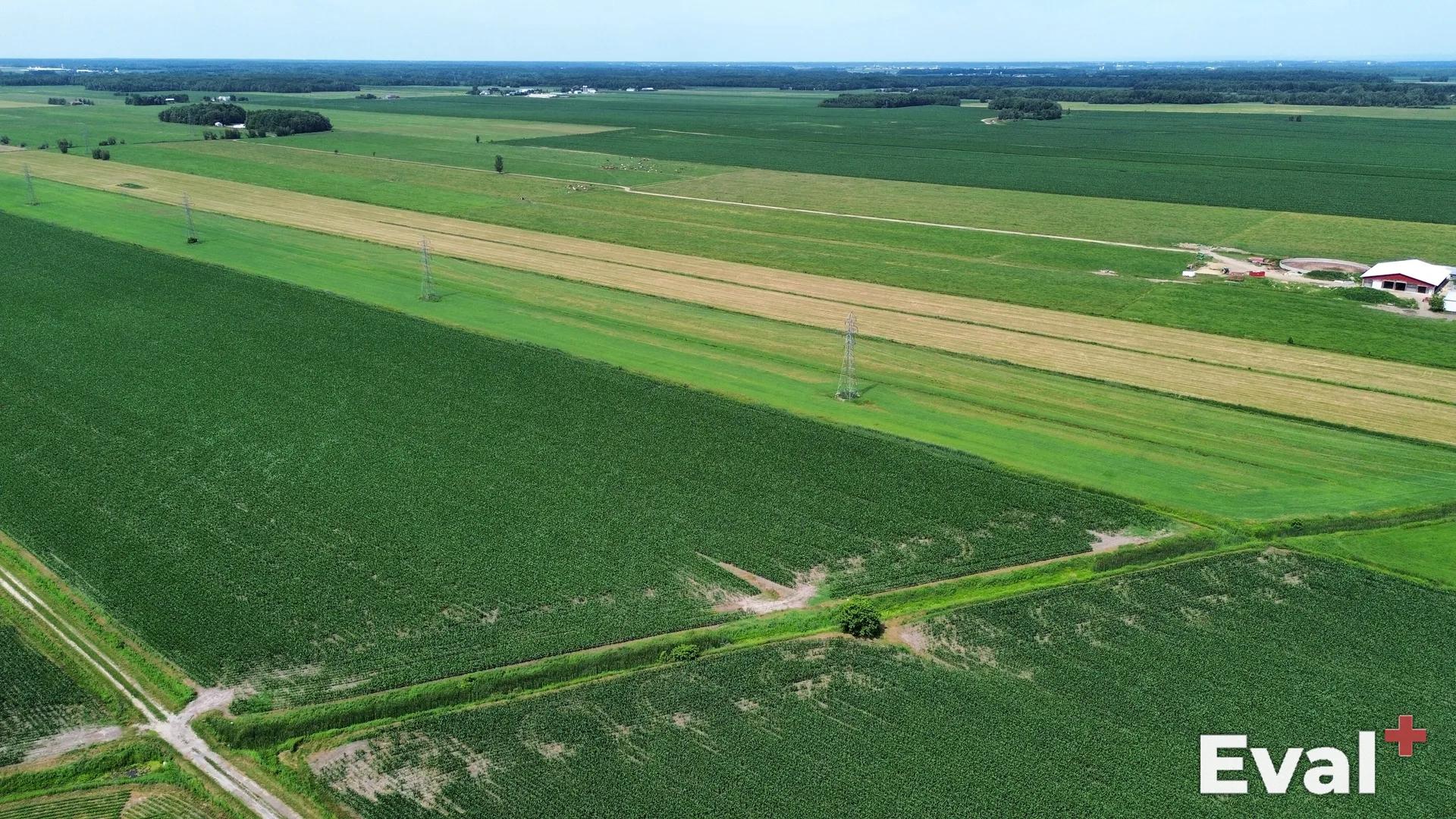
In short: the value of farmland depends mainly on its soils, its drainage, the share that is actually cultivable, its buildings and the rules of the agricultural zone. Published averages give an order of magnitude; the chartered appraiser establishes the value of your land by comparing it to sales of similar farms.
What the market data says
According to La Financière agricole du Québec (Transac-TERRES bulletin, news release of May 21, 2026), the average value of farmland sold in Quebec rose from $21,567 per hectare in 2024 to $21,939 per hectare in 2025, an increase of 1.7%. For cropland, the average reached $33,258 per hectare in 2025, compared to $30,205 in 2024. Centre-du-Québec is one of the five regions that together account for 75% of the transactions recorded.
These figures are provincial averages. From one farm to another, even within the same municipality, the value per hectare can vary considerably.
What makes the value of farmland vary
- Soils: agricultural capability (classes 1 to 7 of the Canada Land Inventory), texture, stoniness, slope.
- Drainage: subsurface drainage, ditches, levelling. Well-drained land can be worked earlier and more consistently.
- Breakdown of areas: cropland, pasture, fallow land, woodland, sugar bush. A cultivated hectare and a hectare of fallow land do not sell at the same price.
- Shape and access: long, regular fields, easy access for machinery and proximity to the buyer's other land all count.
- Buildings: residence, barns, storage buildings, silos. Their contribution depends on their condition and their usefulness to an agricultural buyer.
- Sugar bush: number of taps, density, access, equipment. In the agricultural zone, cutting maple trees in a sugar bush, except for selection or thinning cuts for silvicultural purposes, requires CPTAQ authorization.
- Constraints: watercourses and riparian strips, wetlands, flood zones, servitudes.
The weight of the agricultural zone
In the agricultural zone, the Act respecting the preservation of agricultural land and agricultural activities governs the use of a lot for a purpose other than agriculture, subdivision and the alienation of part of a farm. A buyer therefore cannot assume they will be able to build a house, sever a lot or change the use of the land: a right recognized by law or an authorization from the Commission de protection du territoire agricole du Québec (CPTAQ) is required. The chartered appraiser checks the status of the lot and the CPTAQ decisions that concern it, then compares the farm to sales subject to the same rules.
The methods used
The sales comparison method
This is the main method. The appraiser analyzes recent sales of farms with the same vocation, often brought down to a price per cultivable hectare, then adjusts each sale for its differences with the farm being appraised: date, soils, drainage, cultivable share, woodland, location.
The cost approach, for buildings
For a farm with buildings, the appraiser can estimate the replacement cost of the buildings, subtract depreciation (physical, functional, economic) and add the value of the land. A specialized building that is no longer in use can contribute little to value, even if it is in good condition.
The income approach, depending on the case
When land of the same type is commonly rented in the area, the observed rents can support the analysis.
What is not included
A real estate appraisal covers the land and the buildings. Quotas, machinery, livestock and the other assets of the business are dealt with separately.
Having your farmland appraised
Sale, purchase, transfer to the next generation, estate, division, financing or tax purposes: Eval Plus appraises farmland, woodlots, sugar bushes and hobby farms in Centre-du-Québec, Mauricie and part of Montérégie. See our page on farmland appraisal (in French), request a free quote or call us at (819) 314-2594.
Frequently asked questions about farmland value
Is the average price per hectare enough to know the value of my land?
No. An average groups together very different farms: soils, drainage, cultivable share, woodland, buildings. It gives an order of magnitude of the market, not the value of a specific farm. The chartered appraiser compares your land to sales of similar farms and adjusts for each difference.
Does the appraisal include quotas, machinery and livestock?
A real estate appraisal covers the land and the buildings. Quotas, machinery, livestock and the other assets of the business are not part of it; if they are sold with the land, their value is dealt with separately.
Can I sever a lot from my farm to build a house on it?
Not without checking. In the agricultural zone, subdivision, the alienation of part of a farm and the use of land for a purpose other than agriculture fall under the CPTAQ; a right recognized by law or an authorization is required. The appraiser checks the status of the lot, because it changes the value.
What documents should I provide for a farmland appraisal?
The most useful are: the deed of purchase, drainage plans or invoices, soil analyses, farmland rental leases if any, CPTAQ decisions concerning the lot and, for a sugar bush, the number of taps and the list of equipment.
Updated on